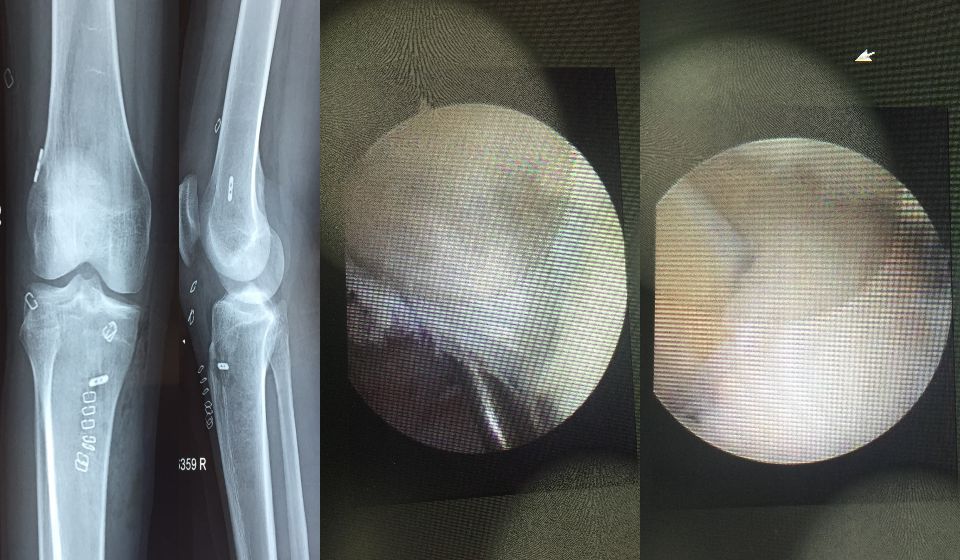
Knee Surgery / Arthroscopic Ligament Reconstruction
Anterior cruciate ligament surgery and rehabilitation have undergone dramatic changes over the past decade, due to extensive clinical experience, improved surgical technique and better understanding of the rehabilitation process.
What is ACL?
Pre and post-operative rehabilitation is a major factor in the success of ACL reconstruction. Early restoration of full joint movement and weight-bearing are of paramount importance for successful rehabilitation.
The aim is to ensure a complete understanding of the basic principles of the ACL reconstruction, to restore the full range of motion, near normal strength and to mentally prepare the patient for the operation and accelerated rehabilitation.
Goals of ACL surgery and rehabilitation are
- to restore normal joint anatomy
- to provide static and dynamic knee stability
- return to work and sport as soon as possible
Diagnosis of ACL injury
A diagnosis of ACL injury is based on a thorough physical examination of the knee. The exam may include several tests to see if the knee stays in the proper position when pressure is applied from different directions. An X-ray and MRI (magnetic resonance imaging) or, in some cases, arthroscopic inspection will confirm a diagnosis of a torn ACL.
A partial tear of the ACL may or may not require surgical treatment. A complete tear is more serious. Complete tears, especially in younger athletes, may require reconstruction.